
Custom Recyclable Food Pouches
Food brands often start a recyclable packaging project with a material request: "Can you make this pouch in Mono PE?" That question comes too early. A recyclable structure still has to preserve flavor, prevent leaks, survive distribution and run at the required speed on the packing line.
Poor planning can create shorter shelf life, unstable seals, excess packaging stock or a recycling claim that does not fit the destination market. Successful custom recyclable food pouches are developed by treating product protection, production performance and end-of-life requirements as one project.
Why Recyclable Pouch Projects Fail
Most problems begin before the first sample is made. Buyers may select a film before defining the shelf-life target, or request a high barrier pouch without measurable oxygen and moisture requirements.
Common warning signs include:
- Zippers, valves and spouts are selected separately from the pouch film.
- Hand-filled samples are approved without a packing-line trial.
- Artwork is completed before recycling language is reviewed.
- Unit price is compared without considering filling speed or product waste.
- One structure is expected to work for every SKU.
- Local flexible-film collection is checked after production.
Each issue can be prevented with a clearer brief, staged testing and a complete-pouch assessment.
Define Success Before Selecting a Material
A supplier can recommend a useful structure only when the project requirements are specific. Start with four groups of information.
Product Profile:
Record ingredients, oil or acid content, moisture level and sensitivity to oxygen, light and aroma loss. Add the fill weight, expected shelf life and storage temperature. Coffee, crackers and sauce may use similar-looking pouches, but their protection needs are very different.
Packing Process:
Document filling temperature, sealing method, line speed and machine type. Include freezing, pasteurization, hot filling or retort conditions. A material that seals well during a hand trial may behave differently on an automated line.
Distribution and Use:
Consider pallet loads, parcel shipping, retail hooks, repeated opening and consumer storage. Heavy contents may need stronger gussets. Multi-use food may benefit from a zipper, while liquids need a compatible spout and cap.
Destination Market:
Identify every country where the pouch will be sold. Collection systems and acceptable disposal messages vary, so packaging claims should be reviewed for the intended market before artwork approval.
Build One Packaging System
Material, barrier, closure and print must work together. Treating them as separate purchases increases technical risk.
Structural Film
Mono PE is often selected for flexibility, sealing and low-temperature toughness. MDO PE can add stiffness and printability while keeping the main structure within the PE family. Mono PP may offer more rigidity, clarity and heat resistance for selected applications.
Neither option is automatically better. Product risks, packing conditions, pouch format and local recycling routes should lead the decision.
Barrier Function
Dry snacks may mainly need moisture protection. Coffee, nuts and pet treats often need oxygen and aroma control as well. Light-sensitive ingredients may require an opaque or metallized structure.
Compatible EVOH layers, coatings or metallization can improve performance, but the finished structure should be reviewed against the relevant recycling design criteria. Ask for measurable OTR and WVTR values instead of relying only on the phrase high barrier.
Closures and Print
Zippers, sliders, valves, spouts, caps, labels, inks and adhesives all form part of the finished pack. Matching accessories to the main polymer family can support a more recycling-compatible design. Heavy ink coverage, decorative coatings or a large label may also affect sorting and reprocessing.
Explore LDPACK's complete recyclable packaging range when comparing structures and formats.
Match the Pouch to the Operating Scenario
Choosing by use case is more reliable than selecting a shape from a catalog.
|
Operating scenario |
Main concerns |
Suitable starting point |
|
Dry food used more than once |
Moisture, oxygen, aroma and resealing |
Stand-up zipper pouch |
|
Premium shelf display |
Stability, print area and shape retention |
Flat-bottom or quad-seal pouch |
|
Liquids and purées |
Leakage, dispensing and drop resistance |
Spout pouch |
|
Heat-processed food |
Temperature, pressure, seal integrity and barrier |
Validated retort pouch |
Dry Food That Needs Resealing
Coffee, tea, snacks, nuts, cereals, supplements and dry pet food often need protection after opening. A recyclable stand-up zipper pouch combines upright display with a resealable closure. Barrier options can be selected for moisture, oxygen, aroma and light control. Freshly roasted coffee may also need a one-way degassing valve.
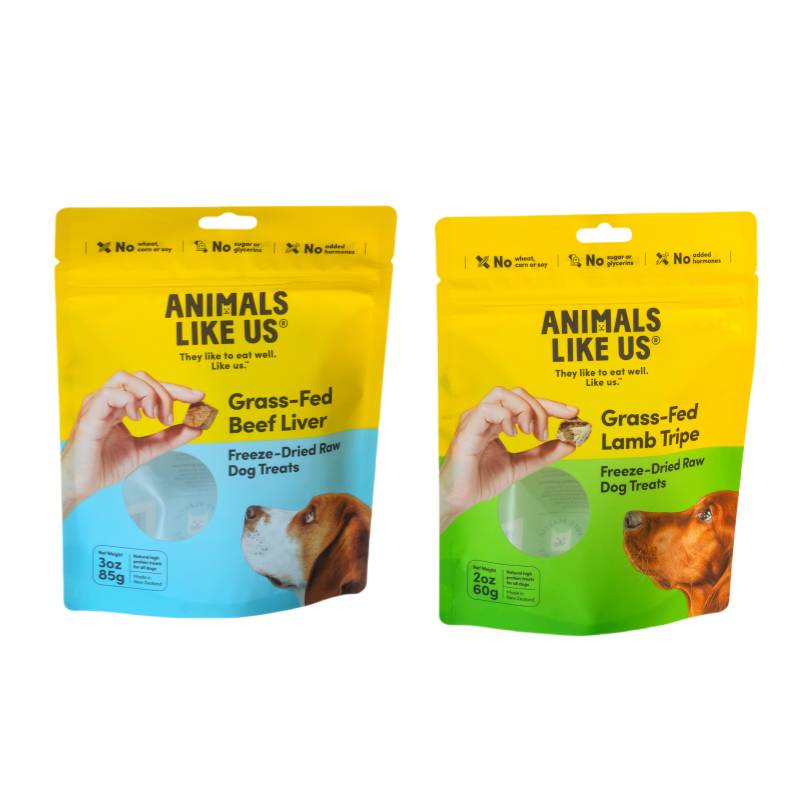
Recyclable Stand Up Zipper Pouch
Premium Products and Heavier Packs
A recyclable flat-bottom pouch offers a stable base and several printable panels for coffee, tea, cereals and premium pet food. Brands that pack heavier or bulkier products can consider a recyclable quad-seal pouch with reinforced side gussets.
Confirm weight capacity using the actual product. Density, sharp edges, handling and transport conditions matter as much as the number printed on a specification sheet.
Liquids That Need Controlled Dispensing
Juice, yogurt, purée, sauce and beverages need strong seals and convenient pouring. A recyclable spout pouch can reduce packaging weight while creating a practical consumer format.
Test spout welding, cap torque, leakage, drop performance and product compatibility. Hot-fill projects also require verification at the intended filling temperature.
Heat-Processed Food
Ready meals, shelf-stable sauces and wet pet food may require retort processing. A recyclable retort pouch must be evaluated as a complete pack under the real temperature, pressure and process time.
Post-process testing should check seals, delamination, leakage, barrier retention and shelf life. Do not approve a retort structure from material data alone.
Use Stage Gates Before Production
Clear approval points prevent a promising sample from moving into production before major risks are resolved.
1. Approve the Specification: Confirm film structure, thickness, dimensions, barrier targets, closure type, print method and required documents. Record measurable requirements rather than general descriptions.
2. Approve a Filled Sample: Fill the pouch with the real product. Check volume, headspace, seal contamination, closure operation, appearance and ease of use. A sample should represent the intended commercial pack as closely as possible.
3. Run a Packing-Line Trial: Test feeding, forming, filling and sealing on the actual equipment. Monitor line speed, seal consistency, film tracking and reject rates. Small changes in stiffness or friction can affect automated production.
4. Validate Performance
Select tests according to the application:
Seal strength, burst and leak tests for liquids
Drop and compression tests for distribution
Puncture tests for hard or sharp products
OTR and WVTR testing for sensitive foods
Thermal-cycle testing for hot-fill or retort packs
Accelerated and real-time shelf-life studies
5. Approve Commercial Production: Sign off the printed sample, color standard, quantity tolerance, packing method and delivery terms. Keep the approved sample for comparison with future batches.
Compare Total Project Cost
Lowest unit price does not always produce the lowest project cost. Include printing setup, testing, filling efficiency, product waste, freight, storage and obsolete inventory in the calculation.
Digital printing can suit trials, seasonal products and several designs because it reduces conventional plate requirements. Gravure printing may provide a better unit cost for stable, high-volume orders.
How LDPACK Supports Material Conversion
Moving from a conventional laminate to recyclable flexible packaging often requires changes to barrier, stiffness, sealing and machine settings. LDPACK develops recyclable packaging solutions using Mono PE, Mono PP, Mono PET and polyolefin-based structures.
Available formats include stand-up, zipper, flat-bottom, quad-seal, spout and retort pouches. Barrier options address moisture, oxygen, light and aroma, while product development can also consider films, lids and automated packaging operations.
R&D support helps brands review the product, process and pouch as one system. Structures can be developed with circular design principles in mind, then tested against the performance and market requirements of the specific project.
Next Steps
Move forward with a short, practical sequence:
- Prepare a product brief with ingredients, fill weight, shelf life and processing conditions.
- Identify the destination market and proposed recycling message.
- Shortlist a primary structure and one backup option.
- Request technical data, samples and food-contact documents.
- Complete filled-pack, line, transport and shelf-life testing.
- Approve artwork only after material and claim reviews are complete.
- Confirm the commercial specification before placing the production order.
FAQ
Q1. Will a Recyclable Pouch Run on Existing Equipment?
A: Often yes, but sealing temperature, dwell time, film stiffness and friction may differ from the current laminate. A line trial should confirm settings and achievable speed.
Q2. Can Several SKUs Share One Production Run?
A: Possibilities depend on pouch size, material, printing method and supplier scheduling. Provide annual volume and quantity per design when requesting a quote.
Q3. When Should Artwork Be Approved?
A: Approve final artwork after confirming dimensions, material, closure, printing method, regulatory text and recycling language. Early artwork approval often causes avoidable revisions.
Conclusion
Custom recyclable food pouches should be chosen through evidence, not a material label. Define product risks, set measurable performance targets and test the complete pack under real production and distribution conditions.
Send your product, shelf-life target, filling process, preferred format, order quantity and destination market through the LDPACK. A complete brief gives the technical team enough information to recommend structures, prepare samples and plan the next validation steps.