
Retort Pouch Seal Integrity Testing: How to Verify Seals Before and After Retort Processing
Retort pouch seal integrity is verified through visual inspection, seal strength testing, burst testing, and leak detection. Manufacturers should inspect pouches before and after retort processing to identify weak seals, wrinkles, leakage channels, and structural damage. Since seal strength alone cannot guarantee leak-free packaging, combining multiple testing methods under actual processing conditions provides a more reliable assessment of packaging performance.
Why Is Seal Integrity Important for Retort Pouch Packaging?
Retort pouches must maintain reliable seals throughout high-temperature sterilization, storage, and transportation. A defective seal can allow external contaminants to enter the package, potentially compromising food safety and product quality.
Seal Strength vs. Seal Integrity
- Seal Strength: The force required to separate two sealed surfaces.
- Seal Integrity: The ability of the entire sealed area to maintain a continuous barrier without leakage.
- Leak Resistance: The ability of packaging to prevent liquid or gas from passing through defects.
A pouch may achieve acceptable seal strength while still containing a small leakage channel. Combining mechanical testing with leak detection provides a more complete evaluation.
What Are the Common Retort Pouch Seal Defects?
Recognizing common defects helps manufacturers select suitable inspection methods and investigate packaging performance.
- Contaminated Seal Areas: Food particles, oil, or moisture interfere with bonding between sealing surfaces.
- Incomplete Seals: Insufficient bonding creates weak or unsealed sections along the pouch opening.
- Channel Leaks: Wrinkles, folds, or trapped particles create narrow leakage pathways.
- Corner and Notch Defects: Pouch corners and tear-notch areas may experience additional mechanical stress.
- Delamination: Separation between laminated layers can affect the overall packaging structure.
Visual inspection identifies many obvious defects, but additional testing is necessary to detect hidden leakage and evaluate mechanical performance.
Which Tests Are Used to Verify Retort Pouch Seal Integrity?
Different testing methods evaluate different aspects of packaging performance. Selection depends on pouch construction, product characteristics, processing conditions, and quality requirements.
Visual Inspection and Seal Width Measurement
Visual inspection is usually the first step in quality control. Inspectors should examine sealing areas for wrinkles, contamination, incomplete bonding, uneven edges, and visible damage.
Seal width should be measured at multiple locations and compared with approved product specifications. Consistent inspection helps identify variations before larger production problems develop.
Retort Pouch Seal Strength Test
A seal strength test measures the force required to separate a sealed section. Test strips are cut from selected sealing locations and placed in a tensile testing machine. Controlled pulling force is applied while the equipment records the separation force.
Results help manufacturers evaluate bonding consistency, compare sealing conditions, and identify weak areas. However, seal strength testing only evaluates sampled sections and cannot independently confirm that the entire pouch is leak-free.
Retort Pouch Burst Test
Burst testing evaluates package resistance to internal pressure. During testing, pressure is introduced into the pouch until failure occurs or a specified pressure is maintained for a defined period. Results help identify weak areas in both the pouch body and sealing regions.
Burst testing is useful for comparing package performance before and after retort processing.
Vacuum, Bubble, and Dye Penetration Tests
These methods help identify leakage pathways:
- Vacuum Leak Test: Uses pressure differences to identify potential package leaks.
- Bubble Leak Test: Uses a suitable vacuum chamber, often with the pouch submerged in water, to reveal escaping air through visible bubbles.
- Dye Penetration Test: Uses a suitable dye solution to identify leakage channels through selected sealing areas.
Each method has specific limitations. Testing procedures should match the package structure and validated quality requirements.
| Testing Method | Main Purpose |
|---|---|
| Visual Inspection | Identify visible defects |
| Seal Strength Test | Measure bonding strength |
| Burst Test | Evaluate pressure resistance |
| Vacuum/Bubble Test | Detect package leakage |
| Dye Penetration Test | Identify leakage channels |
How Should Retort Pouch Seals Be Tested Before and After Retort Processing?
Testing at different production stages helps manufacturers understand how thermal processing affects finished packaging.
Pre-Retort Inspection
Before sterilization, establish baseline quality results through:
- Pouch appearance and material inspection.
- Seal width and alignment measurement.
- Visual checks for wrinkles and contamination.
- Seal strength testing.
- Appropriate initial leak or burst testing.
Recorded results provide reference data for post-retort comparisons.
Post-Retort Inspection
After sterilization, inspect the complete pouch for deformation, leakage, delamination, and changes in sealing performance.
Appropriate tests may include seal strength, burst resistance, leak detection, and visual examination. Comparing results before and after processing helps identify weaknesses caused by thermal exposure, pressure changes, cooling, or handling.
Why Does Retort Processing Affect Seal Performance?
High temperatures and pressure variations place additional stress on flexible packaging materials and sealed areas. Residual air, cooling conditions, and mechanical handling can also influence package performance.
Manufacturers should evaluate filled pouches using representative retort conditions rather than relying exclusively on tests performed on empty samples.
How to Establish a Reliable Retort Pouch Seal Validation Process?
A systematic validation program should cover sealing equipment, material compatibility, and finished package performance.
Control Heat-Sealing Parameters
Three important parameters influence sealing performance:
- Sealing Temperature: Provides the heat required to bond sealing layers.
- Sealing Pressure: Ensures sufficient contact between sealing surfaces.
- Dwell Time: Determines how long heat and pressure are applied.
Changes in production speed, material structure, or equipment conditions may require adjustments to these parameters.
Validate the Sealing Window
Manufacturers should conduct trials using different combinations of temperature, pressure, and dwell time to identify suitable operating conditions.
Validation should confirm consistent sealing performance under representative production conditions.
Establish Routine Quality Inspections
A practical inspection schedule should cover production start-up, equipment adjustments, continuous production, production restarts, post-retort processing, and final product release.
Inspection frequency and sample sizes should follow validated quality procedures, risk assessments, and applicable regulatory requirements.
Maintain Testing Records
Quality documentation should include material specifications, production batch numbers, sealing parameters, sampling locations, testing methods, results, and corrective actions.
Consistent records improve traceability and help identify production variations.
How to Interpret Retort Pouch Seal Test Results?
Testing results should always be compared with approved product specifications and validated acceptance criteria.
| Test Observation | Possible Issue | Recommended Investigation |
|---|---|---|
| Low seal strength | Insufficient bonding | Review temperature, pressure, and dwell time |
| Failure near the seal | Localized weak area | Check contamination and seal uniformity |
| Bubbles during leak testing | Leakage pathway | Identify the exact leak location |
| Delamination after retorting | Lamination or processing issue | Evaluate bonding strength and retort conditions |
| Inconsistent results | Unstable production conditions | Review equipment settings and sampling locations |
LDPACK Retort Pouch Solutions
Reliable packaging starts with suitable material structures, sealing performance, and compatibility with the intended sterilization process. LDPACK provides customized flexible packaging solutions for food brands and manufacturers requiring heat resistance, barrier protection, and reliable packaging performance.
What Are the Advantages of LDPACK Retort Pouches?
LDPACK's published product range offers several options for different food packaging applications:
- Heat Resistance: Selected retort pouch structures are designed for processing conditions up to 121°C for 30 minutes, subject to product specifications and process validation.
- Customized Material Structures: Laminated structures with or without metallization can be selected according to application requirements.
- Barrier Protection: Suitable material combinations help protect food products against oxygen, moisture, and other external factors.
- Food Packaging Options: Material choices can be evaluated according to applicable food-contact requirements.
- Flexible Customization: Pouch dimensions, printing, and structural configurations can be tailored to different products.
- Recyclable Options: Mono-material PP and other suitable polyolefin-based structures support specific recyclable packaging objectives.
Which LDPACK Retort Pouch Should You Choose?
Standard Retort Pouch for Ready Meals and Sauces
Suitable for ready-to-eat meals, shelf-stable sauces, seafood, and wet pet food. Laminated structures can be selected according to barrier requirements and sterilization conditions.
Recyclable Retort Pouch for Sustainable Food Packaging
LDPACK offers a mono-material PP retort pouch option with a published structure containing at least 90% PP and no metallized layer. This option is worth evaluating for brands seeking recyclable packaging solutions.
Retort Spout Pouch for Purees and Liquid Foods
Suitable for selected applications such as fruit puree and liquid foods. Spout, cap, and pouch compatibility should be evaluated together, particularly when the complete package undergoes thermal processing.
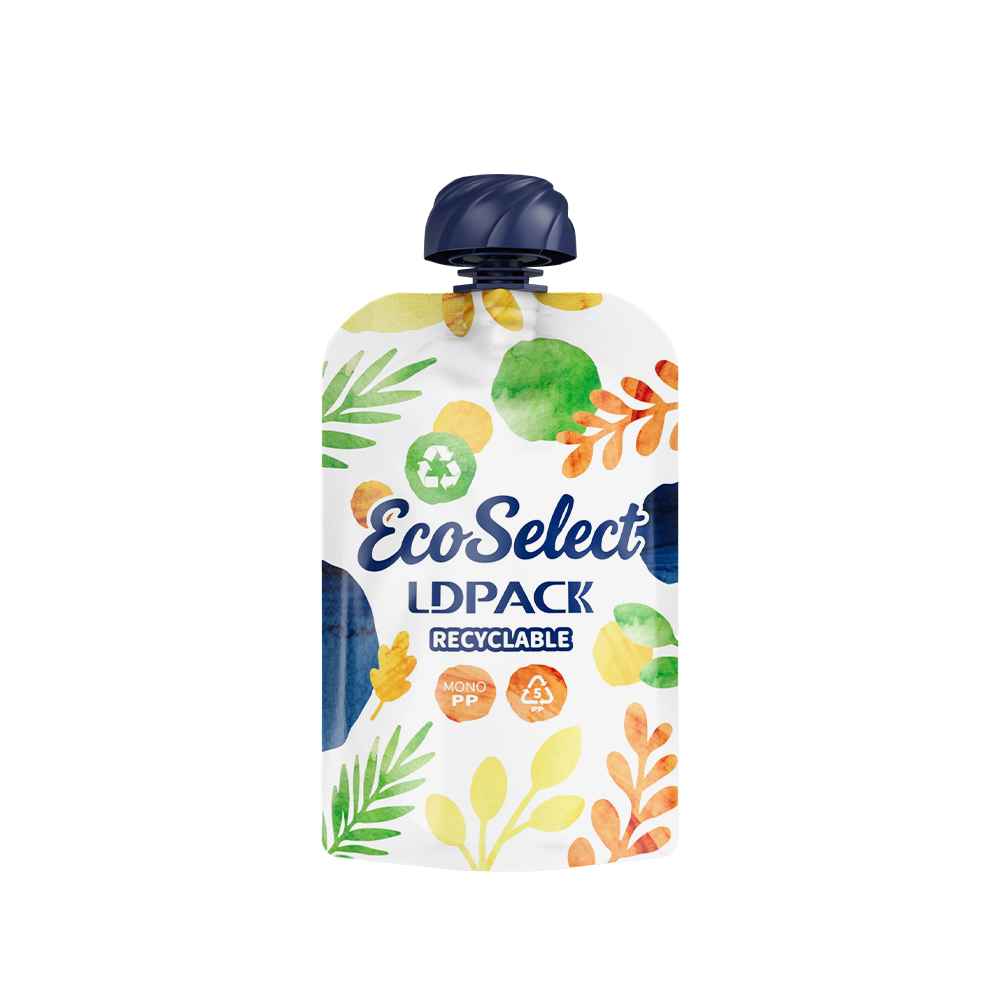
Before selecting a product, confirm sterilization conditions, target shelf life, barrier requirements, filling equipment, and destination market. Explore LDPACK's Retort Pouch Solutions, Recyclable Retort Pouches, and Retort Spout Pouches.
What Should Buyers Ask Their Retort Pouch Manufacturer?
Before approving a packaging supplier, food brands and purchasing teams should ask:
- What seal strength and leak detection tests can you perform?
- Can you provide pre-retort and post-retort testing results?
- How are sealing parameters controlled during production?
- How do you monitor consistency across production batches?
- Can you provide material specifications and relevant quality documentation?
- Can you support sample evaluation and pilot production trials?
Conclusion
Retort pouch seal integrity testing plays an important role in maintaining packaging quality and protecting food products throughout sterilization, storage, and transportation. Visual inspection, seal strength testing, burst testing, and leak detection each provide valuable information about package performance. Combining appropriate methods before and after retort processing helps manufacturers identify weaknesses and establish reliable quality controls.
Choosing an experienced packaging supplier also makes a difference. LDPACK offers customized standard retort pouches, recyclable retort pouches, and retort spout pouches for different food applications.
Looking for suitable retort pouch packaging for your product? Contact LDPACK to discuss your material requirements, sterilization conditions, and customized packaging solutions.