
Aseptic Bags in Drums for Concentrates: What Buyers Should Check
Aseptic bag-in-drum packaging for concentrates depends on more than nominal capacity. The film, fitment and drum must match the product and filling process, then withstand the intended storage and transport conditions.
Quick Answer
Choose an aseptic bag-in-drum by matching five things: the concentrate, required barrier, drum dimensions, filling and discharge connections, and storage route. Request a drawing and representative samples before approving a production order. A sterile bag alone cannot establish the filled product's shelf life.
If you are buying filled concentrate rather than empty packaging, also ask the ingredient supplier for its product specification and Certificate of Analysis. LD PACK manufactures packaging; those documents describe the contents of a filled drum.
What is an aseptic bag-in-drum?
It is a flexible food-contact bag supported by a rigid drum. The bag provides the barrier and a fitment for filling; the drum carries the weight and protects the bag during handling. The bag and product are treated separately, then brought together and closed in a controlled aseptic filling process. A drum cannot make an ordinary liner aseptic. Shelf life must be established for the filled product under its intended storage conditions.
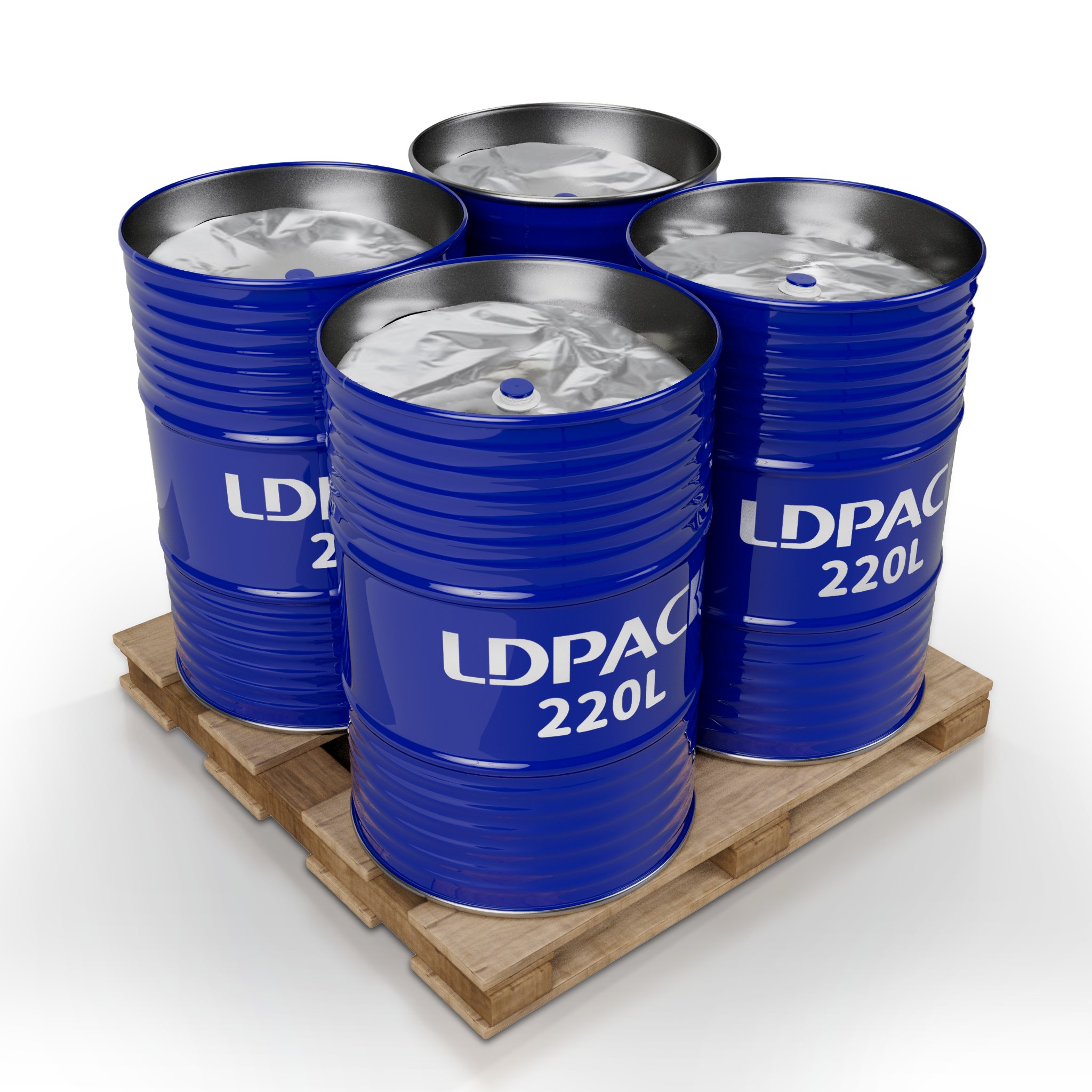
Best bag-in-drum applications
Bag-in-drum packaging suits bulk liquids and semi-liquids sent to another facility for processing. Match each application to the questions your filling and receiving teams need to answer.
| Application | Packaging priority | Check in the trial |
|---|---|---|
| Juice concentrate | Quality during storage and transport | Barrier choice, storage temperature and pump connection. |
| Fruit puree or pulp | Flow through the fitment | Particle size, filling speed and residue after emptying. |
| Tomato paste or thick sauce base | Handling a viscous product | Fitment opening, bag support and discharge efficiency. |
Which details about the concentrate matter most?
Start your inquiry with the product, rather than a request for the "strongest" film. Two ingredients supplied in 220L Bag-in-drum (BIB) may behave differently on the same line.
| Product detail | Why the packaging team needs it |
|---|---|
| pH, Brix and product type | Establish the product and processing conditions under review. |
| Viscosity and largest particle size | Affect filling flow, fitment opening and the amount left after emptying. |
| Fill temperature | The film, seals and closure must suit the intended filling cycle. |
| Sensitivity to oxygen and light | Guides the barrier review and quality checks during storage. |
| Target storage period and route | Sets realistic conditions for trials and filled-product validation. |
Will a 220L Bag-in-drum (BIB) fit your drum?
A 220L label does not guarantee fit. Send the supplier the drum's internal diameter, usable height, lid design and a photograph of its interior. State whether the bag is filled inside the drum or inserted after filling. These details affect bag geometry and fitment position.
The Aseptic Bag Manufacturers Association (ABMA) lists 905 ± 15 mm by 1,560 ± 15 mm as reference dimensions for certain 200L and 220L bags. Spout position varies with the filling method; check the actual drum and filler.
Check these four points in a sample run:
- The empty bag sits within the drum without snagging on an edge or weld.
- The fitment reaches and engages the filling head without excessive strain.
- The filled bag is supported by the drum, including beneath the lid.
- The lid closes without pinching the film or fitment.
Litres and kilograms answer different questions. Product mass in kg = actual fill volume in L × measured density in kg/L. For example, 200L at 1.10 kg/L weighs about 220 kg before packaging. Use measured density and approved fill volume for shipping calculations.
Will the bag work on your filling line?
Send the filler make and model, filling-head drawing and current fitment specification. Confirm the spout size and position, cap or valve type, and the method used to treat the closure during filling. Then confirm the connection needed to empty the drum. Filling and discharge may call for different connections.
Question for the line engineer: Can the intended bag be placed, filled, closed and removed using the current sequence, without pulling on the fitment or exposing the film to damaging contact?
What should a production-size trial include?
A small sample bag can help with early formulation work. To approve a 220L bag-in-drum, test a representative 220L configuration with the intended product, drum and filler settings.
- Review the sample lot. Match bag and fitment drawings, material information, applicable package treatment records and food-contact documentation.
- Watch the fill. Record fitment engagement, product temperature, filled volume and any contact with hot equipment or rough drum surfaces.
- Check the closed drum. Inspect seals, fitment, bag folds, lid clearance and visible film damage.
- Handle and empty it. Use the intended pallet and unloading method. Measure residual product when yield is a concern.
- Agree on acceptance criteria. Record package integrity and filled-product quality checks for the planned storage and shipping conditions.
Keep the approved sample, drawing revision and trial record with your purchasing specification. They provide a clear reference when you reorder or change the filling line.
What can LD PACK supply for this project?
LD PACK publishes a 220L Industrial Aseptic Bag-in-drum with multilayer film, built-in taps and standard or custom material options. That is a real product starting point, not a published customer trial or a promised shelf-life result.
For smaller batches, consider the receiving team's handling needs with a bag-in-box format. For 220L drums, share the drum drawing, filler interface and product brief before requesting samples. See LDPACK's range of formats.
To request a review, send: product type, pH, Brix, viscosity, particles, fill temperature, storage plan, drum dimensions, filling-head drawing, destination market and estimated quantity. State which details still need confirmation.
FAQ
Q1. Is a standard drum liner the same as an aseptic bag?
A: No. A liner can contain a product without being suitable for the specified package treatment and controlled aseptic filling process. Request the exact bag and closure specification.
Q2. Does a 220L bag always hold 220 kg?
A: No. Litres measure volume; kilograms measure mass. Calculate net mass using the actual fill volume and the concentrate's measured density.
Q3. Which barrier is best for fruit puree?
A: Choose after reviewing the puree's oxygen and light sensitivity, storage conditions and quality targets. Compare test data for the proposed film, then confirm performance with a filled-product trial.
Q4. Can a mono-material PE bag be used for every aseptic product?
A: No single structure fits every process. Check the proposed bag's barrier, seals, fitment and treatment compatibility against your product and line. Assess any recycling claim for the destination market.
Conclusion
Choosing aseptic bags in drums for concentrates starts with the product, then the packaging system around it. Confirm the film barrier, fitment, drum dimensions and filling process against your storage and transport conditions. A representative 220L trial can reveal fit, handling and discharge issues before a production order. Share product data and equipment drawings with LD PACK to review a suitable bag-in-drum configuration, then validate package integrity and filled-product quality on your line.