
Can Food Packaging Use Post-Consumer Recycled Plastic?
Food brands are looking for practical ways to reduce virgin plastic without compromising product safety, shelf life, or packaging performance. Post-consumer recycled plastic, commonly known as PCR plastic, is one option but food packaging needs a more careful approach than ordinary packaging.
Yes, food packaging can use PCR plastic in certain applications. The recycled material must come from a controlled source, go through suitable cleaning and decontamination, and match the actual food-contact conditions of the package. For flexible food packaging, PCR is often considered in outer layers, non-food-contact layers, or selected middle layers before direct food-contact use is evaluated.
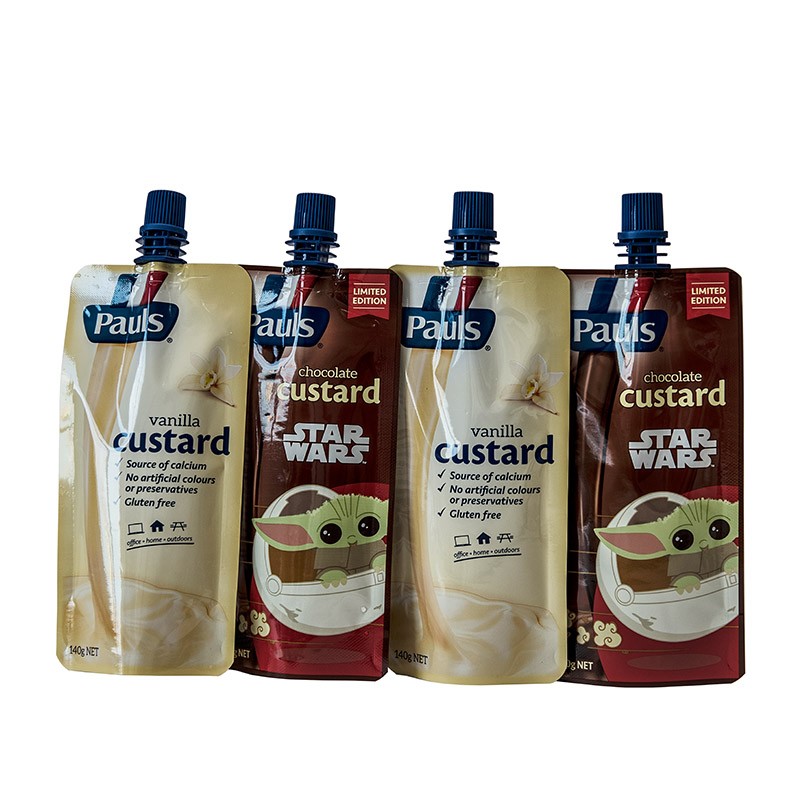
For pre-made pouches, the structure matters as much as the material. A dry snack pouch, a spout pouch for sauce, and a retort pouch for ready meals all face different contact, sealing, barrier, and heat-resistance requirements. That is why PCR should be reviewed by application, not only by recycled-content percentage.
What Is PCR Plastic in Food Packaging?
Post-consumer recycled plastic is plastic recovered after consumer use. It may come from used bottles, containers, and other collected plastic packaging. After collection, the material is sorted, washed, processed, and converted into recycled resin or film materials.
For food packaging, this process needs stricter control. Used plastics may carry residues, odors, or unknown contaminants from their previous life. If the recycled material is intended for food-contact use, the recycling process must be able to reduce potential contaminants to a level suitable for the intended application.
This is why food-contact PCR is not simply “recycled plastic.” It is recycled plastic supported by source control, decontamination, testing, and documentation.
Can PCR Plastic Directly Touch Food?
PCR plastic can directly contact food only when the material and recycling process are suitable for that specific use. It should not be assumed that every PCR resin is acceptable for direct food contact.
A packaging buyer should check:
- where the recycled plastic comes from;
- how the material is collected and sorted;
- what decontamination process is used;
- whether the material is intended for direct or indirect food contact;
- what food types, temperatures, and contact times are covered;
- whether the final pouch structure has been tested;
- what documents support the claim.
For flexible food packaging, many brands start by evaluating PCR in non-food-contact layers. This can help reduce virgin plastic use while keeping the inner food-contact layer selected for safety, sealing, and product compatibility.
Why Food-Contact PCR Needs More Control
The main concern with PCR in food packaging is possible contamination. This does not mean PCR is unsafe by nature. It means PCR must be handled through a process that is designed for food-contact applications.
Food packaging must protect the product from outside conditions, but it must also avoid adding unwanted substances to the food. With PCR, packaging teams usually need to review three areas.
1. Source Control
Source control means understanding where the recycled plastic comes from.
Food-contact PCR should come from a controlled and suitable input stream. The supplier should be able to explain whether the input material was originally used for food-contact applications, how it was collected, and how unsuitable materials were removed.
For food pouches, this is especially important because flexible packaging often has multiple layers, inks, adhesives, coatings, and additives. Not every recycled plastic stream is suitable for food packaging.
2. Decontamination Process
Cleaning is not enough for food-contact PCR.
A food-contact recycling process must be able to remove possible incidental contaminants. Depending on the material and recycling route, this may involve washing, drying, melt filtration, solid-state processing, vacuum treatment, chemical recycling, or other decontamination steps.
The key point is not the name of the process. The key point is whether the process has evidence showing it can produce recycled plastic with suitable purity for the intended food-contact use.
3. Use Condition
Even when PCR is suitable for one application, it may not be suitable for another.
A recycled plastic approved or reviewed for cold-fill dry food packaging may not automatically be suitable for hot-filled sauce, retort sterilization, microwave heating, or long-term contact with oily food.
Food brands should always match the PCR documentation to the actual packaging condition.
Where PCR Can Be Used in Flexible Food Pouches
Flexible packaging is often built from multiple layers. Each layer has a function, such as printability, stiffness, barrier protection, puncture resistance, or heat sealing. This gives pouch manufacturers different ways to evaluate PCR.
PCR in the Outer Layer
The outer layer is often the first place to consider PCR because it does not directly touch the food. This approach may support recycled-content goals while keeping the inner layer focused on food-contact safety and sealing performance.
However, PCR in the outer layer still needs review. It can affect printing quality, stiffness, heat resistance, odor, and lamination stability.
PCR in the Middle Layer
PCR may also be considered in selected middle layers. This can be useful when the pouch structure includes a suitable barrier between the recycled material and the food.
The barrier layer, material thickness, contact time, temperature, and food type all need to be checked before confirming the structure.
PCR Behind a Virgin Food-Contact Layer
For many pre-made food pouches, a practical structure is to use a virgin food-contact layer inside and place PCR in a non-contact or supporting layer. This approach can help balance food safety and recycled-content goals.
PCR in the Food-Contact Layer
Direct food-contact PCR requires the highest level of review. The recycled material and process must be suitable for the intended food, temperature, and contact time. This is especially important for baby food, dairy, meat, oily sauces, and retort foods.
What Should Food Brands Ask Before Choosing PCR Pouches?
Choosing a PCR pouch is not only about adding recycled content. For food brands, the real decision is whether the pouch can safely protect the product, run smoothly on the filling line, and support the intended sustainability claim. Before confirming a PCR pouch structure, brands should review the following points with their packaging supplier.
1. PCR Layer Position
The first question is where the PCR material is used in the pouch structure.
In flexible food packaging, PCR can be placed in different layers, such as the outer print layer, a middle support layer, or in limited cases the food-contact layer. Each position carries a different level of review. PCR in the outer layer is generally easier to evaluate than PCR in the direct food-contact layer, but it still needs to be checked for odor, print quality, heat resistance, and lamination stability.
Key points:
- Confirm whether PCR is used in the outer layer, middle layer, or food-contact layer.
- Ask whether the food-contact layer remains virgin material.
- Check whether a functional barrier separates PCR from the food.
- Do not approve the structure if the PCR layer position is unclear.
2. Intended Food-Contact Condition
A PCR pouch should be matched to the exact food application, not described with a broad term such as “food grade.”
Food type, filling temperature, storage condition, and contact time all affect packaging safety. A pouch for dry snacks has a different risk profile from a pouch for oily sauce, dairy products, wet pet food, or retort meals. If the supplier cannot connect the PCR structure to the actual product condition, the recommendation is not specific enough.
Key points:
- Identify whether the food is dry, wet, oily, acidic, salty, or aromatic.
- Confirm whether the product is cold-filled, hot-filled, pasteurized, or retorted.
- Review storage conditions such as ambient, refrigerated, frozen, or high-temperature distribution.
- Check whether the PCR documentation covers the same contact time and temperature as the final application.
3. Recycling Route and Input Control
Brands should understand how the PCR material is produced and how the input stream is controlled.
Mechanical recycling and chemical recycling have different technical considerations. Mechanical PCR may require closer review of odor, color, gels, black spots, and batch consistency. Chemically recycled material may require review of traceability, mass-balance documentation, and food-contact acceptance in the target market. In both cases, source control is essential because recycled plastic can come from different previous uses.
Key points:
- Ask whether the PCR is mechanically recycled or chemically recycled.
- Confirm the source of the recycled feedstock.
- Check whether the input stream is controlled and traceable.
- Ask how unsuitable or non-target materials are removed.
- Review whether the recycling route is appropriate for the intended food packaging use.
4. Pouch Performance on Filling Lines
A PCR pouch must still perform as a commercial food package. Even when the material is suitable on paper, it must be stable during converting, filling, sealing, packing, transport, and storage.
PCR may affect melt behavior, stiffness, surface quality, sealing window, or lamination performance depending on the resin quality and layer position. For pouch formats with spouts, zippers, valves, gussets, or retort requirements, the finished package should be tested under realistic conditions.
Key points:
- Check heat-seal strength and sealing window.
- Review pouch stiffness, forming stability, and machinability.
- Test zipper, spout, cap, valve, or fitment sealing if included.
- Confirm barrier performance after pouch making.
- Run filling-line trials before mass production.
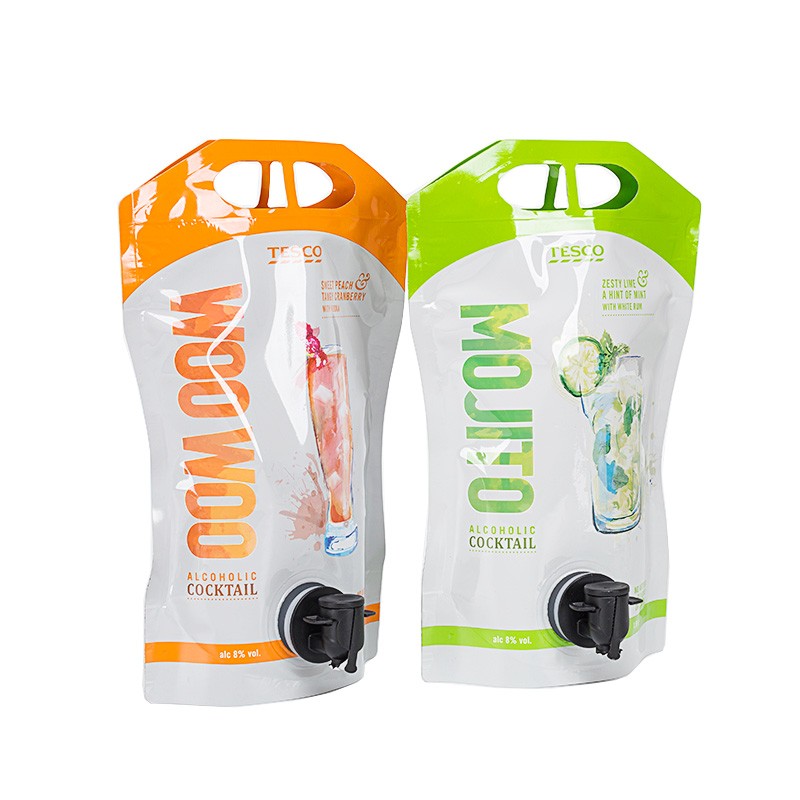
Double Gusset Spout Pouch for Alcoholic Drink
Choosing the Right LD PACK Pouch Structure
The right PCR or sustainable pouch structure should start from the packed product, not from the recycled-content target alone. Food type, filling temperature, shelf-life requirement, barrier performance, sealing method, and sales channel all affect the final structure.
LD PACK offers different pre-made pouch formats for dry food, liquids, sauces, dairy products, pet food, ready meals, coffee, snacks, and other food applications. Each format can be reviewed with PCR, recyclable mono-material, high-barrier, or conventional laminated structures depending on the project requirement.
Conclusion
Food packaging can use PCR plastic, but only when the recycled material, decontamination process, pouch structure, and food-contact conditions are properly verified. For flexible pouches, PCR is often reviewed first in outer or middle layers, while direct food-contact use needs stronger support. Brands should check layer position, migration risk, sealing performance, shelf life, regulatory documents, and claim evidence before choosing a PCR pouch for production or launch.
FAQ
Q1. Can PCR plastic be used for food-contact packaging?
A: Yes, but only when the recycled material and recycling process are suitable for the intended food-contact use. The FDA’s PCR submission list shows that favorable opinions are tied to specific processes, plastics, food types, and conditions of use.
Q2. Is PCR plastic safe for direct food contact?
A: Not always. Direct food-contact PCR needs stronger documentation than PCR used in outer or middle pouch layers. Brands should confirm food type, contact time, temperature, and migration support before approval.
Q3. Can PCR be used in flexible food pouches?
A: Yes, especially in non-contact or middle layers. For pre-made pouches, the final structure should be checked for barrier performance, sealing strength, odor, shelf life, and compatibility with the filling process.
Q4. Is PCR packaging the same as recyclable packaging?
A: No. PCR means the package contains recycled plastic. Recyclable packaging means the structure is designed to enter a recycling stream after use. A pouch can contain PCR without being recyclable, so both claims need separate evidence.
Q5. What should food brands ask before buying PCR pouches?
A: Brands should ask where the PCR layer is used, whether it touches food, what recycling process is used, what documents support food-contact use, whether finished-pouch testing has been completed, and whether the PCR claim applies to the whole pouch or only one layer.