
Recyclable Packaging Pouch Selection Guide
A Recyclable Packaging Pouch is no longer a niche packaging option. It has become a serious consideration for brands that want to reduce material waste, improve shipping efficiency, and respond to growing market pressure for more responsible packaging.
But choosing the right pouch is not as simple as switching from a conventional laminated bag to any package labeled “recyclable” . A pouch still has to protect the product, maintain shelf life, run well on filling equipment, and make sense for the market it serves. In other words, good packaging is still about performance first.
Why Recyclable Packaging Pouches Matter
Flexible packaging has always offered practical advantages. It is lightweight, space-efficient, and easier to transport than many rigid formats. A recyclable pouch keeps those advantages while giving brands a better chance to align packaging decisions with sustainability goals.
That said, a Recyclable Packaging Pouch is not automatically the best choice for every product. Some applications need stronger barrier performance, longer shelf life, or more complex structures than a recyclable format can realistically provide. The right decision depends on the product, the sales channel, the storage environment, and the actual recycling pathway available in the target market.
Pros and Cons of Recyclable Packaging Pouches
Before selecting any pouch structure, it helps to look at the trade-offs clearly.
Pros of Recyclable Packaging Pouches
1. Lower material use: Compared with many rigid packaging formats, pouches usually use less material. That can reduce packaging weight and improve freight efficiency.
2. Better shipping efficiency: Flexible pouches take up less space before filling and often weigh less after packing. This can help lower logistics costs, especially in high-volume distribution.
3. Strong shelf presentation: A well-designed Recyclable Packaging Pouch can still deliver premium printing, strong brand visibility, and a clean retail appearance.
4. Alignment with sustainability goals: For brands trying to move toward more responsible packaging, recyclable pouch structures can support a more credible long-term strategy than difficult-to-recover mixed laminates.
5. Good fit for many dry and semi-dry products: Snacks, pet treats, supplements, powders, household refills, and some personal care products can often work well in recyclable pouch formats.
Cons of Recyclable Packaging Pouches
1. Barrier limitations in some applications
Not every recyclable pouch delivers the same oxygen, moisture, light, or aroma barrier as a conventional multi-layer structure. That can be a problem for sensitive products.
2. Recycling access is not always consistent
A pouch may be technically recyclable, but that does not mean every local recycling system will accept it. This remains one of the biggest market challenges.
3. Material choices can be more restrictive
When a brand commits to a Recyclable Packaging Pouch, it may have fewer structure options than with traditional complex laminates.
4. Transition costs may exist
Moving to a recyclable format can require material testing, sealing trials, shelf-life validation, and sometimes equipment adjustments.
|
Aspect |
Main Advantage |
Main Limitation |
|
Sustainability direction |
Simpler material story |
Depends on real recycling systems |
|
Logistics |
Lightweight and space-efficient |
Not always ideal for every channel |
|
Brand presentation |
Strong print and shelf appeal |
Some finishes may be more limited |
|
Product protection |
Works well for many categories |
High-barrier needs can be harder to meet |
|
Commercial use |
Suitable for many growing brands |
Validation and conversion take time |
Categories of Recyclable Packaging Pouches
Not all Recyclable Packaging Pouch solutions perform the same way. In real packaging development, pouch categories should not be judged only by appearance or recyclability claims. They should be evaluated by material structure, barrier capability, sealing behavior, mechanical strength, and end-use suitability.
A more professional way to classify recyclable pouches is to look at them from both format and material-engineering perspectives.
1. Mono-Material PE Recyclable Pouches
Mono-material PE pouches are one of the most widely used options in the recyclable flexible packaging market. Because the structure is built primarily around polyethylene, it offers a simpler material stream than conventional mixed laminates.
These pouches are often selected for products that need a practical balance between recyclability, sealability, and cost control.
Typical advantages
- good flexibility and toughness
- reliable heat-sealing performance
- relatively mature material supply base
- suitable for many dry and semi-dry packaged products
Best-fit applications
- snacks
- powders
- pet treats
- household refill packs
- dry food ingredients
2. Mono-Material PP Recyclable Pouches
Mono-material PP pouches are often used when brands want a more structured pouch appearance or when stiffness and clarity are important. Compared with PE-based structures, PP can deliver a different feel on shelf and different performance during converting and filling.
Typical advantages
- higher stiffness
- cleaner retail presentation
- good dimensional stability in some pouch formats
- useful for products that benefit from a more upright appearance
Best-fit applications
- premium dry foods
- nutritional products
- selected personal care items
- retail products where visual presentation matters
3. Recyclable Stand-Up Pouches
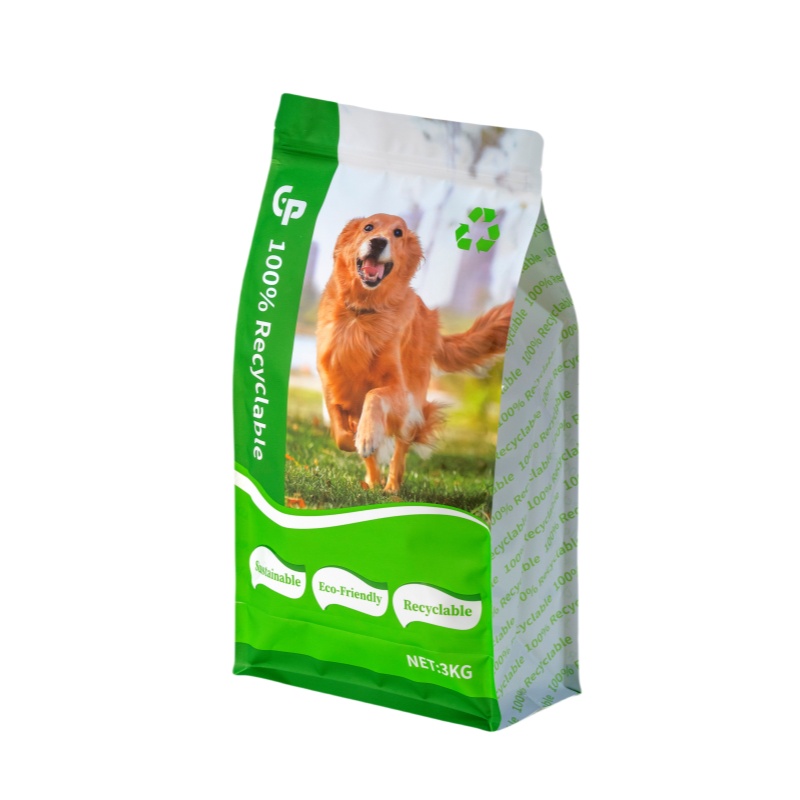
Stand-up pouches remain one of the most commercially valuable pouch formats because they combine shelf visibility with consumer convenience. When designed with recyclable-compatible structures, they can offer a strong packaging solution for modern retail brands.
Typical advantages
- strong shelf presence
- larger printable surface area
- better merchandising performance
- consumer-friendly format for resealable packaging
Best-fit applications
- granola and cereals
- protein powder
- dried fruit
- coffee alternatives
- bath and wellness products
- premium pet treats
4. Recyclable Flat Pouches
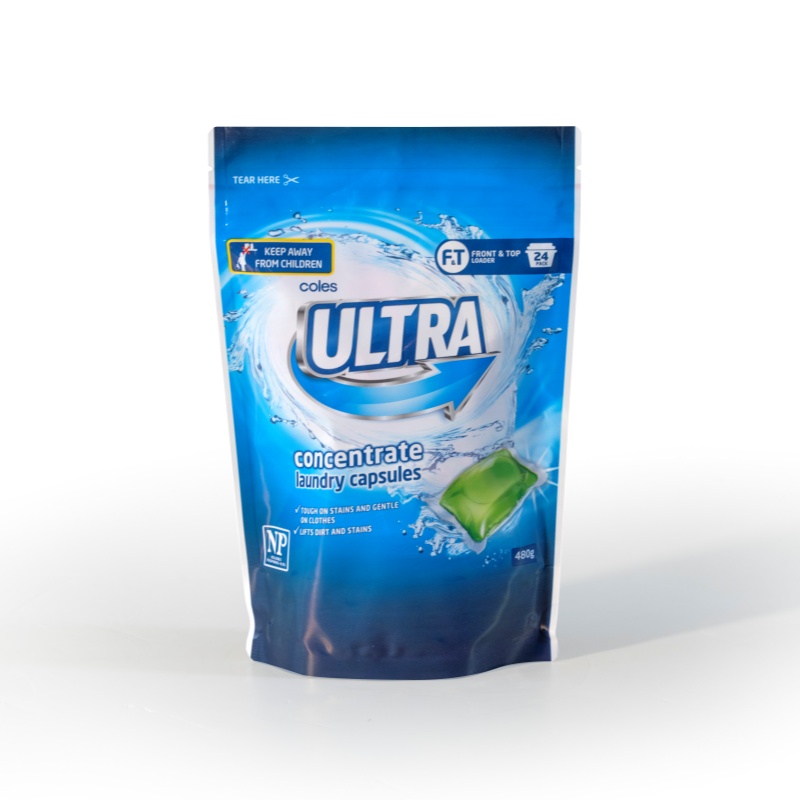
Flat pouches are structurally simpler than stand-up pouches and are often chosen when cost efficiency, compact packaging, or single-use convenience is the priority.
Typical advantages
- simpler converting structure
- lower material use in many cases
- efficient for smaller pack sizes
- suitable for high-volume sampling or lightweight filling formats
Best-fit applications
- sachets
- trial packs
- travel-size products
- facial masks
- sample powders
- small refill units
5. Recyclable Zipper Pouches
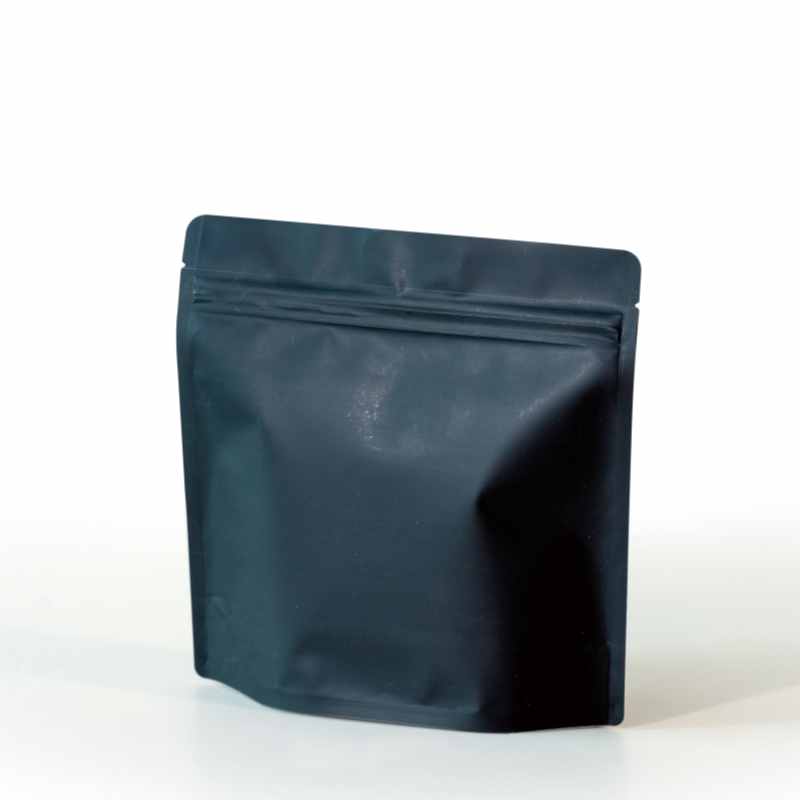
Zipper pouches are designed for products consumed over multiple uses. In these applications, convenience becomes part of the packaging performance, not just an added feature.
Typical advantages
- better consumer usability
- improved reclose function
- helps preserve product quality after opening
- supports premium positioning in many retail categories
Best-fit applications
- snacks
- pet food and treats
- baking ingredients
- dried fruit
- nuts
- household refill products
Recyclable Stand Up Zipper Pouch
6. Recyclable Spouted Pouches
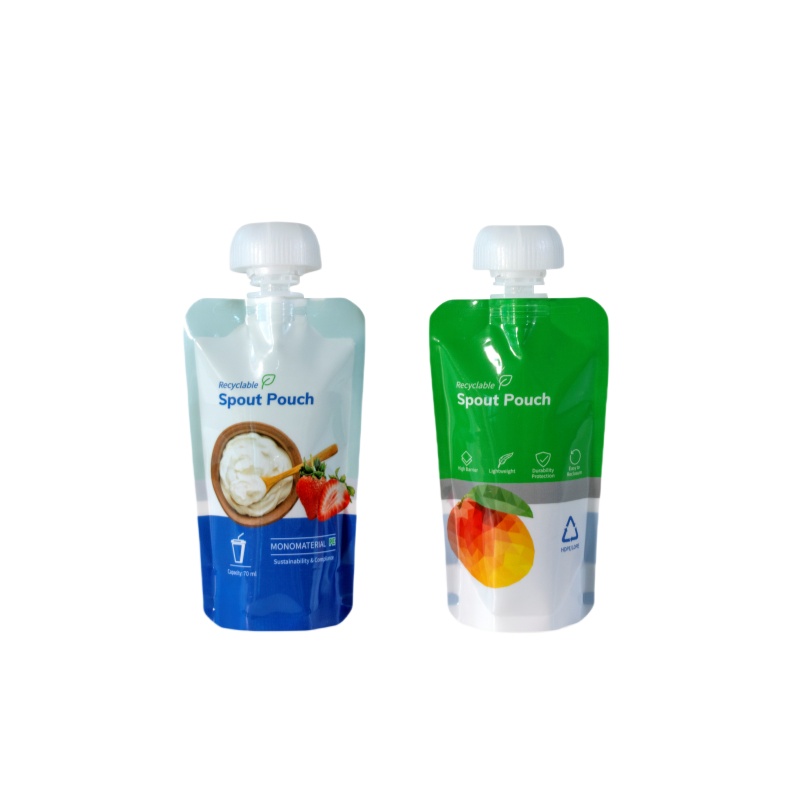
These pouches are used when controlled dispensing or liquid/semi-liquid handling is required. They are more specialized than standard dry-product pouches and require careful design review.
Typical advantages
- convenient dispensing
- reduced mess during use
- good fit for refill systems and consumer convenience formats
Best-fit applications
- detergents
- liquid refills
- personal care products
- sauces and semi-liquid products in suitable structures
How to Choose the Right Recyclable Packaging Pouch
Selecting the right Recyclable Packaging Pouch is a technical decision, not just a branding choice. A pouch has to protect the product, run efficiently on packaging equipment, hold up during storage and distribution, and still support a credible recyclability claim in the target market. The best choice usually comes from balancing performance, cost, and end-of-life practicality rather than chasing the broadest sustainability message.
1. Start with the Product, Not the Pouch
The first step is to understand what the product demands from the package. Different products create very different packaging risks.
A professional review should consider:
- moisture sensitivity
- oxygen sensitivity
- light sensitivity
- aroma retention needs
- oil or grease interaction
- particle shape and puncture risk
- required shelf life
2. Define the Barrier Requirement Clearly
Once product sensitivity is clear, the next step is to define the barrier target. This is one of the most important parts of pouch selection because barrier mismatch is one of the most common causes of packaging failure.
Key performance areas include:
- moisture vapor protection
- oxygen control
- aroma containment
- grease resistance
- post-opening protection
- shelf-life stability under normal storage conditions
3. Match the Material Structure to the Application
Not all recyclable pouch structures perform the same way. Material selection should be based on product behavior, filling conditions, and the target market’s recycling pathway.
In practice, buyers should evaluate:
- mono-material PE structures
- mono-material PP structures
- standard recyclable pouches for dry goods
- enhanced-barrier recyclable structures for more sensitive products
4. Consider Product Weight and Physical Stress
Product weight and physical behavior directly affect pouch performance.
A pouch for a lightweight powder may perform well with a simpler film, while heavier or sharper products place more stress on seals, gussets, and film toughness. This is especially important for:
- dense fills
- heavy pack sizes
- abrasive contents
- sharp-edged products
- products packed under compression or stacked in bulk
5. Review Filling and Sealing Compatibility
A pouch that looks promising in a sample stage may still create problems in real production. That is why machine compatibility has to be reviewed early.
Important checks include:
- sealing temperature range
- dwell time sensitivity
- seal contamination risk
- line speed compatibility
- film stiffness during forming
- zipper or closure integration
- dimensional consistency during automated filling
6. Evaluate Storage and Distribution Conditions
Packaging performance is heavily influenced by the environment it moves through. A pouch that performs well in controlled testing may behave differently in real logistics conditions.
Review the likely exposure to:
- warehouse heat and humidity
- shipping vibration
- pallet pressure
- carton compression
- sunlight or retail lighting
- parcel delivery drop impact
Why Choose LD PACK Recyclable Packaging?
Our recyclable packaging is designed with mono-material structures such as Mono-PE, Mono-PP, Mono-PET, and polyolefin blends, offering full recyclability and excellent barrier performance against moisture, oxygen, and light.
100% Recyclable: Supports circular economy goals and easy recycling.
CEFLEX-Compliant Design: Meets European sustainable packaging standards and mainstream recycling requirements.
Versatile & Efficient: Compatible with automated packaging lines for pouches, films, and lids.
Lightweight & Eco-Friendly: Reduces material usage and lowers carbon footprint.
Conclusion
A Recyclable Packaging Pouch can be a smart packaging solution when performance, product fit, and end-of-life practicality are considered together. It offers real advantages in material efficiency, freight performance, and brand positioning, but it also comes with technical limits that should not be ignored.
The best pouch is not always the one with the boldest sustainability message. It is the one that protects the product, performs reliably in production and transit, and supports a packaging story the brand can defend with confidence.
FAQs
Q1. Are recyclable packaging pouches actually recyclable in real life?
A: Sometimes yes, sometimes no. It depends on the pouch structure and the recycling systems available in the local market. Many buyers search this question because “recyclable” on-pack does not always mean easy curbside recycling.
Q2. Do recyclable pouches have the same shelf life as traditional laminated pouches?
A: Not always. Some recyclable pouch structures can perform very well, but highly sensitive products may still need stronger barrier protection than a simpler recyclable structure can provide.
Q3. Are recyclable packaging pouches more expensive?
A: They can be, especially during the transition stage. Costs depend on material type, order volume, printing, closures, and testing requirements. In some cases, logistics savings can offset part of the added packaging cost.
Q4. Can recyclable pouches be used for food packaging?
A: Yes, many can. But the right Recyclable Packaging Pouch for food depends on product type, barrier needs, sealing performance, and compliance requirements.